Learning their needs by tracking the bees
- Role
- Postdoctoral research fellow
- Institution
- University of Guelph
- Collaborators
- Dr. Nigel Raine, E. Franklin
- Study system
- Spring and late-summer bumble bee queens (Bombus spp.)
- Methods
- Radio telemetry, nest and overwintering site location, habitat selection analysis
- Years
- 2021–2025
- Status
- Manuscripts in preparation
Bumble bees need at least 3 resources to survive: flowers (their
food source), nest sites (to raise their young), and overwintering
sites (for queens to hibernate for the winter). However, we know
very little about their nesting and overwintering habitat, partly
because these sites are so hard to find - they are usually
underground!
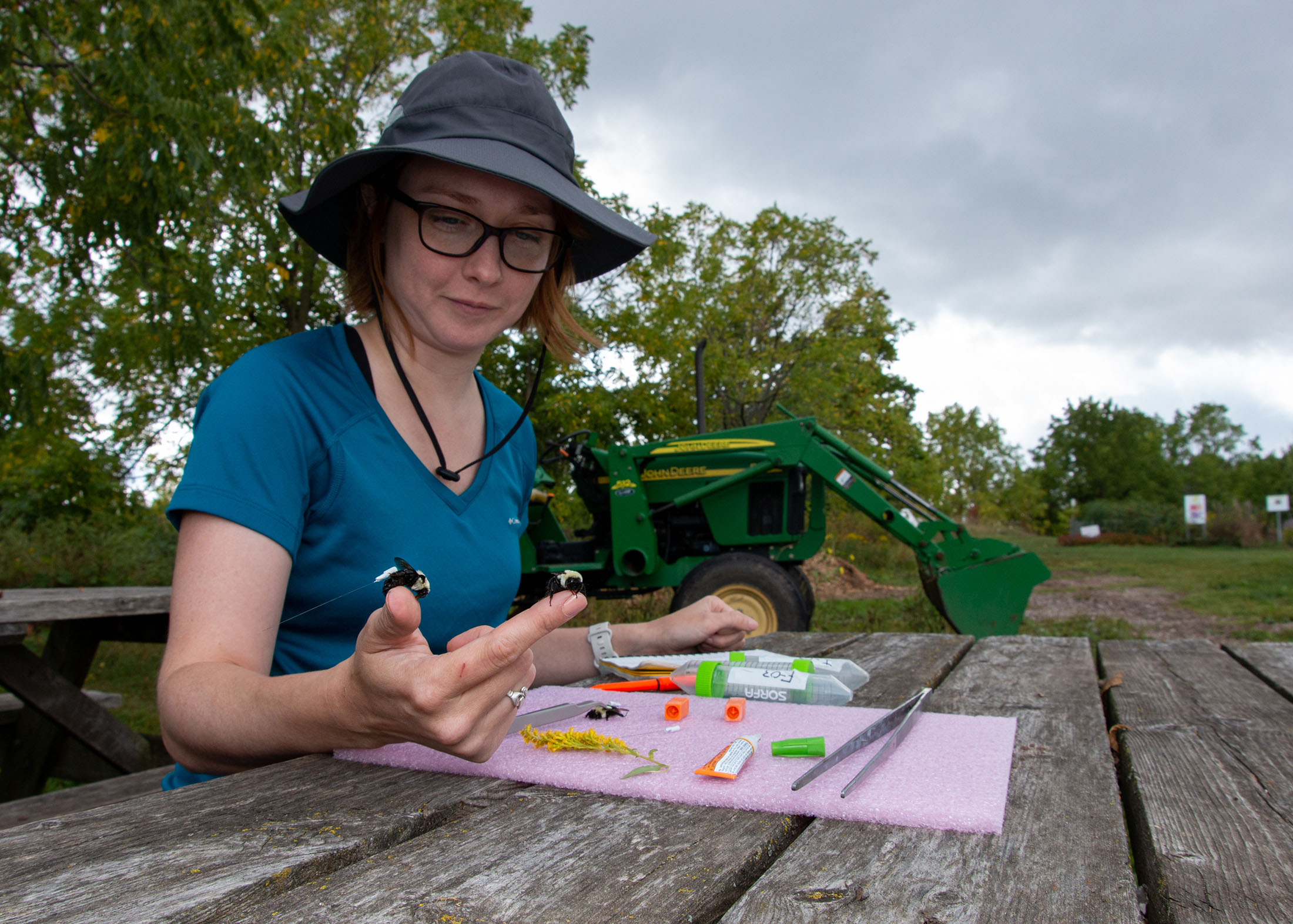
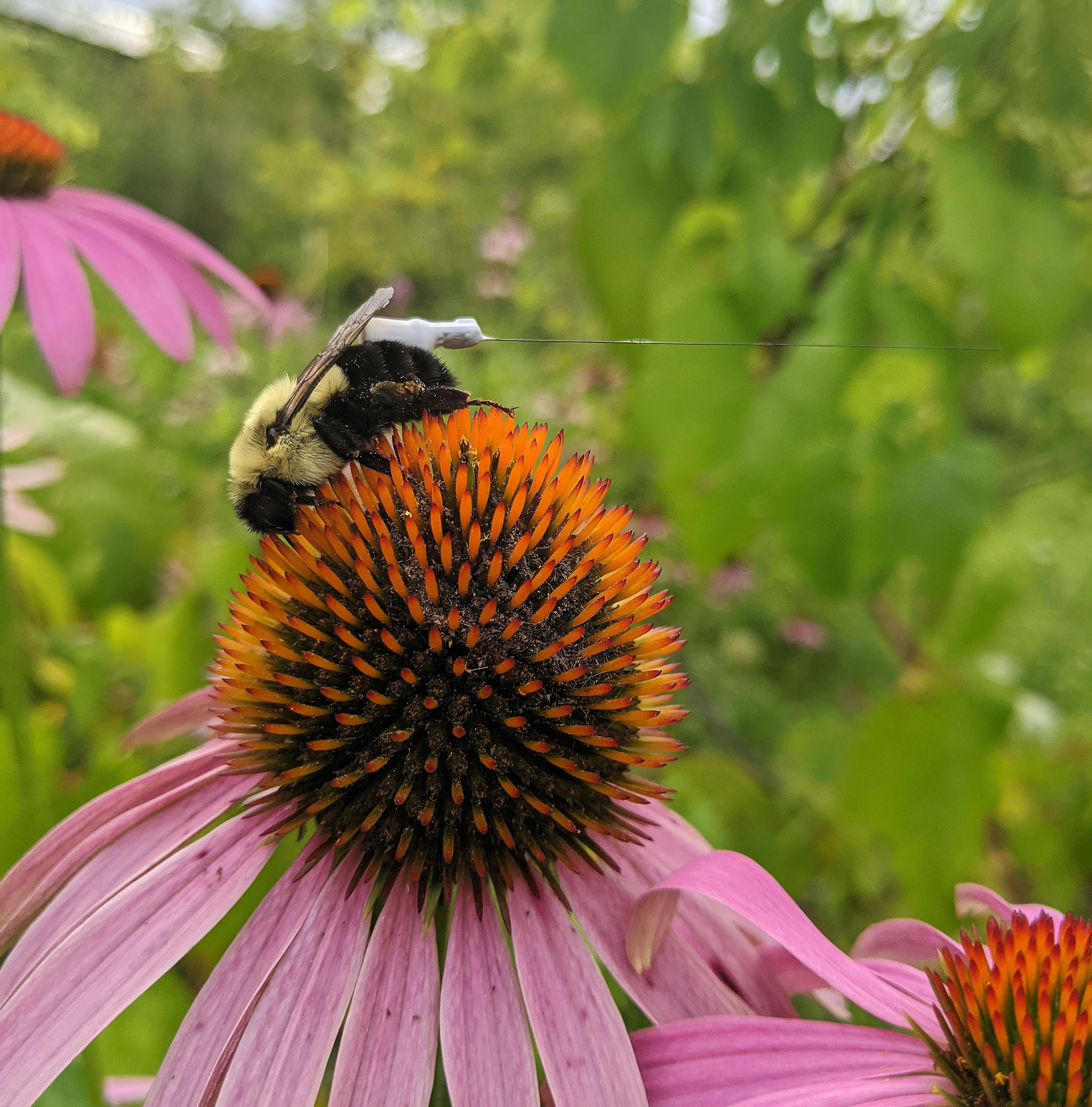
We also know very little about their movement behaviour and habitat
selection. For larger animals, it has been easier to track their
movements using radio collars or GPS collars that send a signal
giving the animal's location. Until very recently the technology has
not existed for researchers to be able to follow smaller animals
such as bumble bees.
In this project we tagged spring bumble bee queens and late summer
bumble bee queens to learn more about their movement behaviour,
habitat selection, and about their nesting and overwintering habitat
locations.
We are still analyzing the data, but it appears late-summer queens often return to the same areas and can be active for up to 50 days. They also may overwinter at the same location with many other queens.
We are still analyzing the data, but it appears late-summer queens often return to the same areas and can be active for up to 50 days. They also may overwinter at the same location with many other queens.
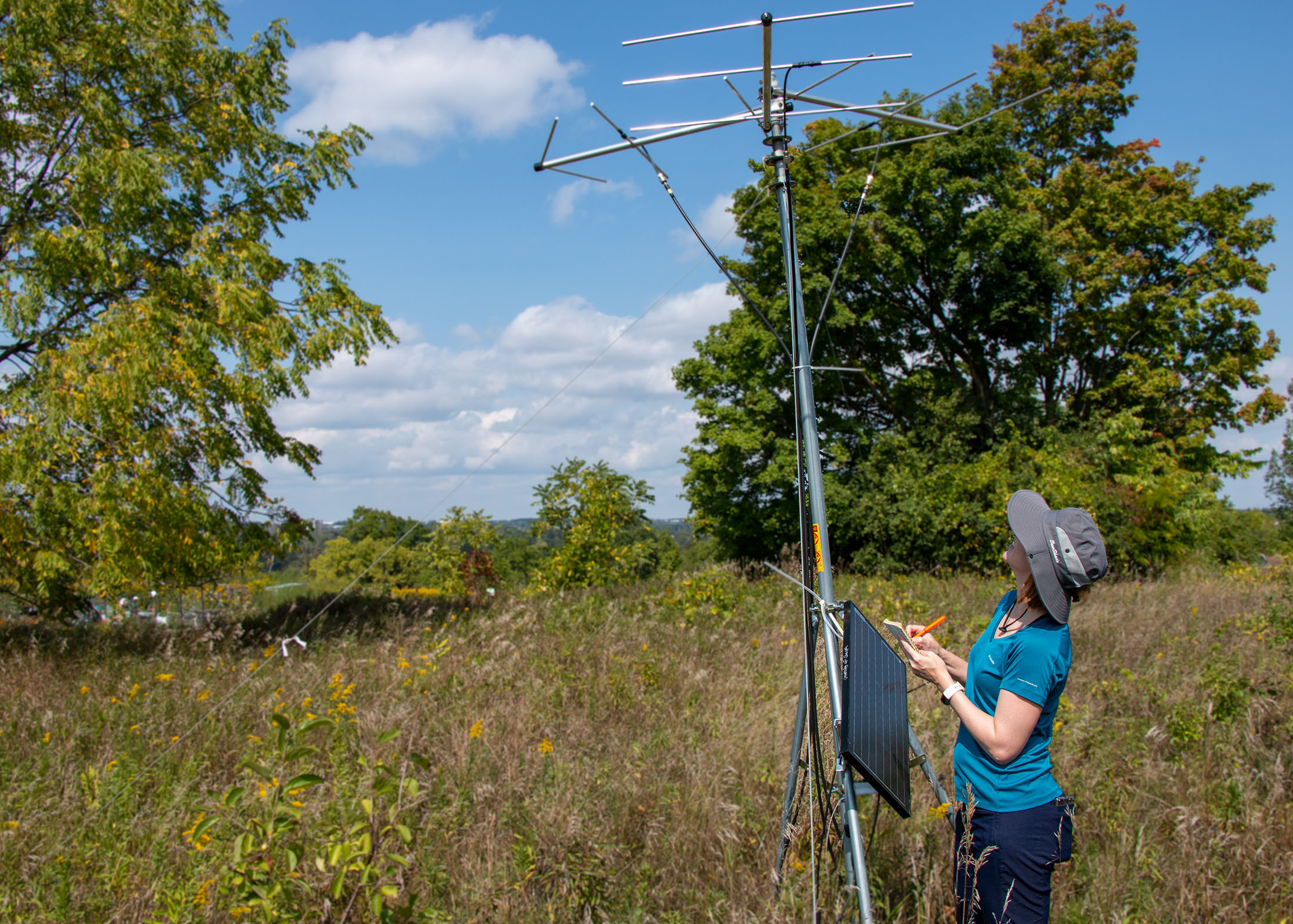
Their movements are tracked using radio towers set up at our study
sites. Using this data, we have compared the flight distance, home
range, habitat usage and selection of bumble bee queens.
Research significance
Two of the three resources bumble bees require have never been systematically located in the wild, which means conservation planning has been built on forage alone. By tracking individual queens to their nesting and overwintering sites, this work supplies the habitat descriptions those plans are missing. The finding that late-summer queens can remain active for up to 50 days and may aggregate at overwintering sites changes both the survey window and the spatial unit of protection.
Outputs
- Liczner AR, Franklin E, Raine N. Using radio-telemetry to track spring bumble bee queen movement and identify habitat selection. In preparation.
- Liczner AR, Franklin E, Raine N. Examining bumble bee behaviour and habitat selection during a sensitive life stage using radio telemetry. In preparation.
- Liczner AR, Franklin E, Rondeau S, Raine N. 2024. Using radio-telemetry to discover habitat selection and movement behaviour of bumble bees. Invited talk, Joint meeting of the Entomological Societies of Canada and Quebec, Quebec City.
- Liczner AR, Franklin E, Raine N. 2024. Overwintering and nesting behaviour of bumble bees unveiled using radio telemetry. Animal Behaviour Society, London, Canada.
- Media: Bees with backpacks, Canadian Geographic (2024); Globe and Mail (2023).