Research
How behavioural decisions, habitat selection, and movement determine where populations persist, and how to turn that into conservation action.
Migration priority areas and connectivity science
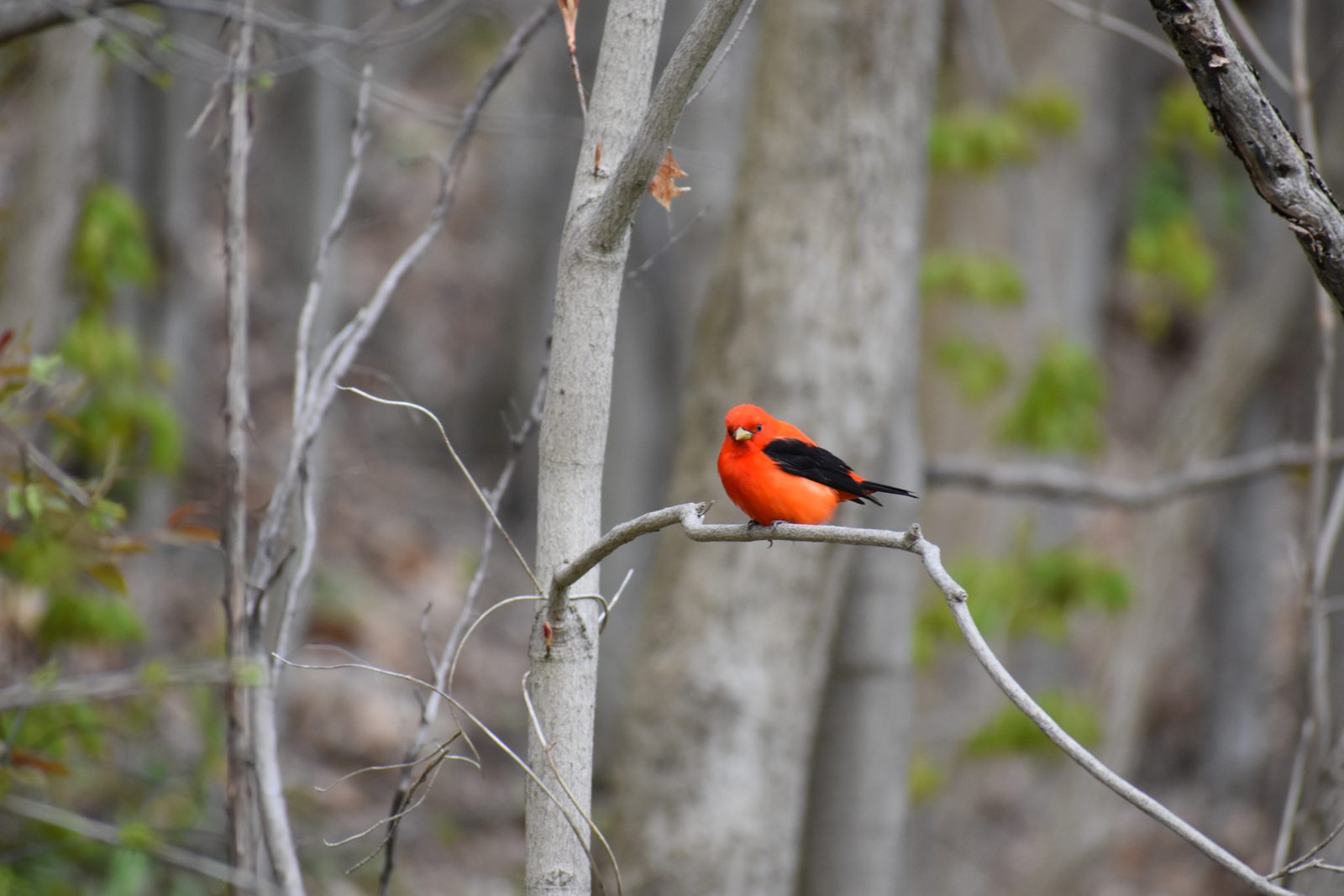
At Western University, with the Centre for Animals on the Move, I work on identifying key migratory areas for conserving birds, using the continental Motus Wildlife Tracking System to model movement across the Great Lakes region of northeastern North America. It is a key migratory region, so the results matter for mitigating threats to migrating individuals. This builds on a multi-institution synthesis I led on the advances and unresolved challenges in ecological connectivity science, which set out how to move beyond static connectivity maps towards representations that reflect the actual movement and behaviour of organisms.
Behaviour and movement under environmental change
How do contaminants, weather, and season change where animals go, how far, and how long they stay active?
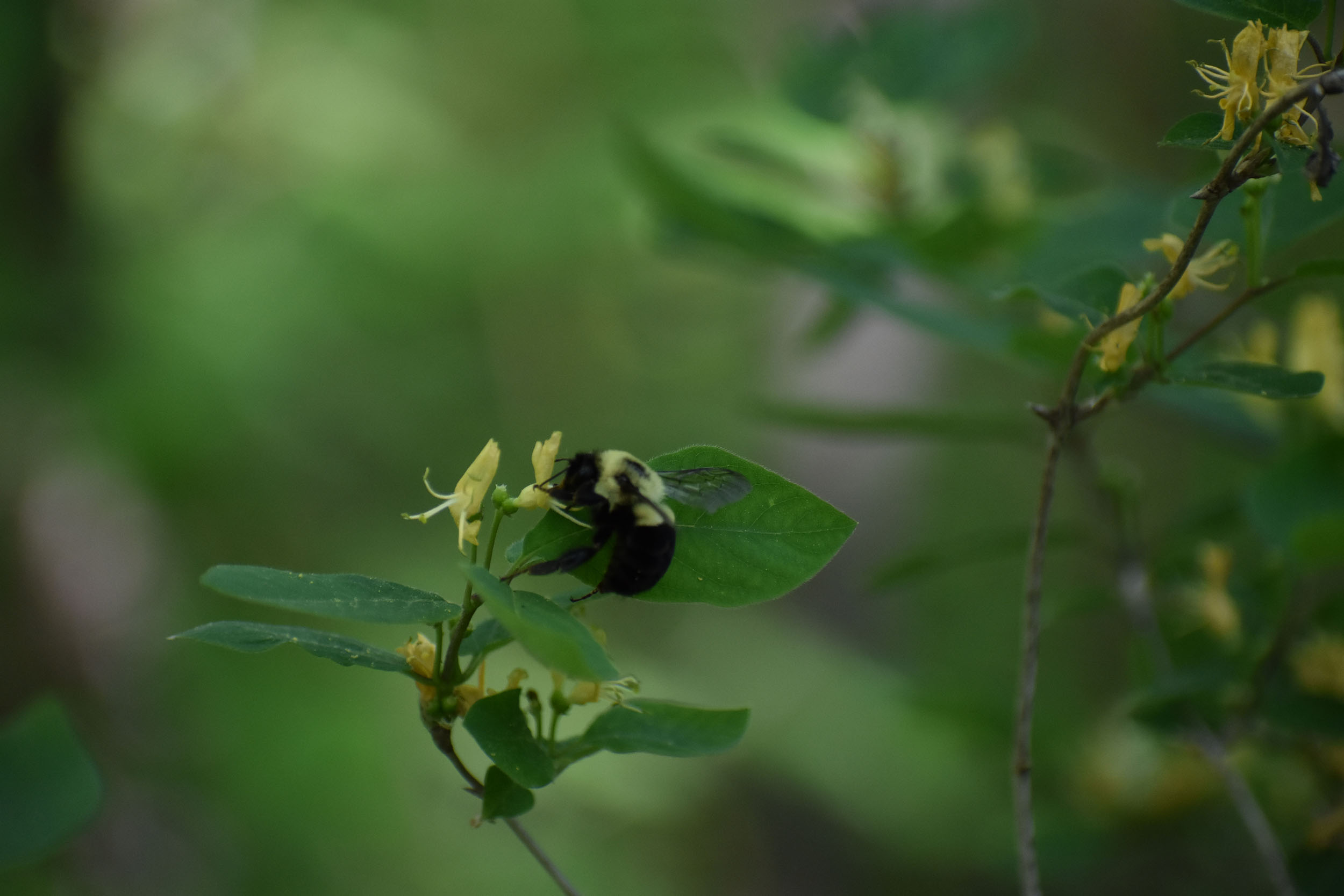
Movement is the behaviour through which an animal experiences its environment, so it is also the first behaviour to register environmental change, often long before abundance does. I use miniaturised radio telemetry to measure flight distance, home range, habitat use, and activity duration in individually tracked bumble bee queens, and I apply the same framework to migratory birds and bats at landscape scale. The practical payoff is sublethal endpoints that regulators can actually use.
Impacts of environmental stressors on bumble bee queen movement
Testing whether newer classes of insecticide alter the movement behaviour of bumble bee queens, using miniaturised radio tags and a tower array to track free-flying individuals.
Learning their needs by tracking the bees
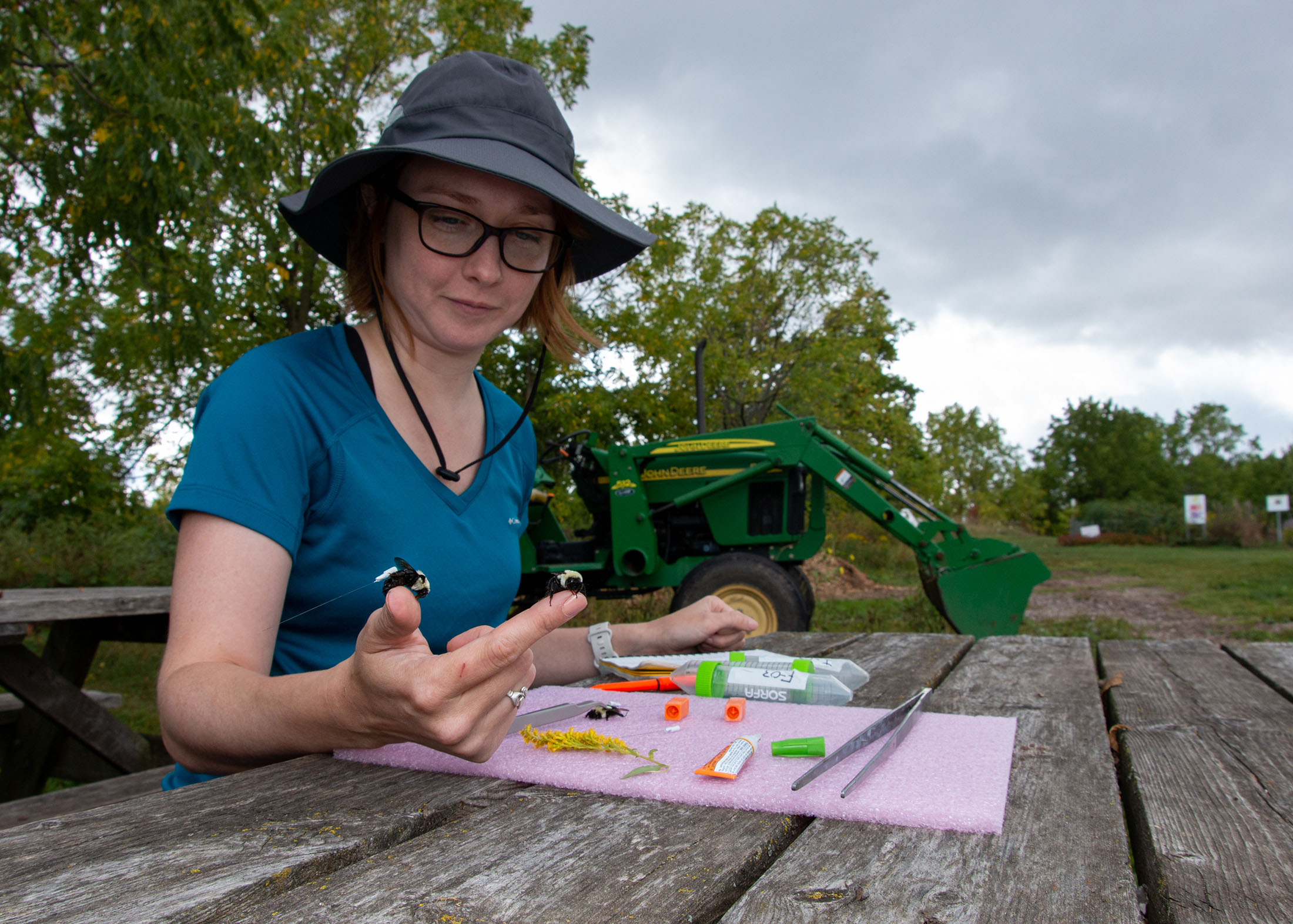
Tagging spring and late-summer bumble bee queens to learn about their movement behaviour, habitat selection, and the location of their nesting and overwintering sites.
Habitat selection across the life cycle
A population is limited by its scarcest life stage, so I locate and characterise the habitat animals need at every point in the cycle, including the stages nobody has been able to observe.
Bumble bees need three resources (forage, nest sites, and overwintering sites) and conservation has historically planned around only the first, because the other two are underground and nearly impossible to find. I have approached this from several directions: a global systematic review of what is actually known about nesting and overwintering habitat, telemetry to locate those sites directly, detection dogs as a survey method, and tests of the abiotic cues that set the timing of these transitions.
Urban bees response to backyard gardens
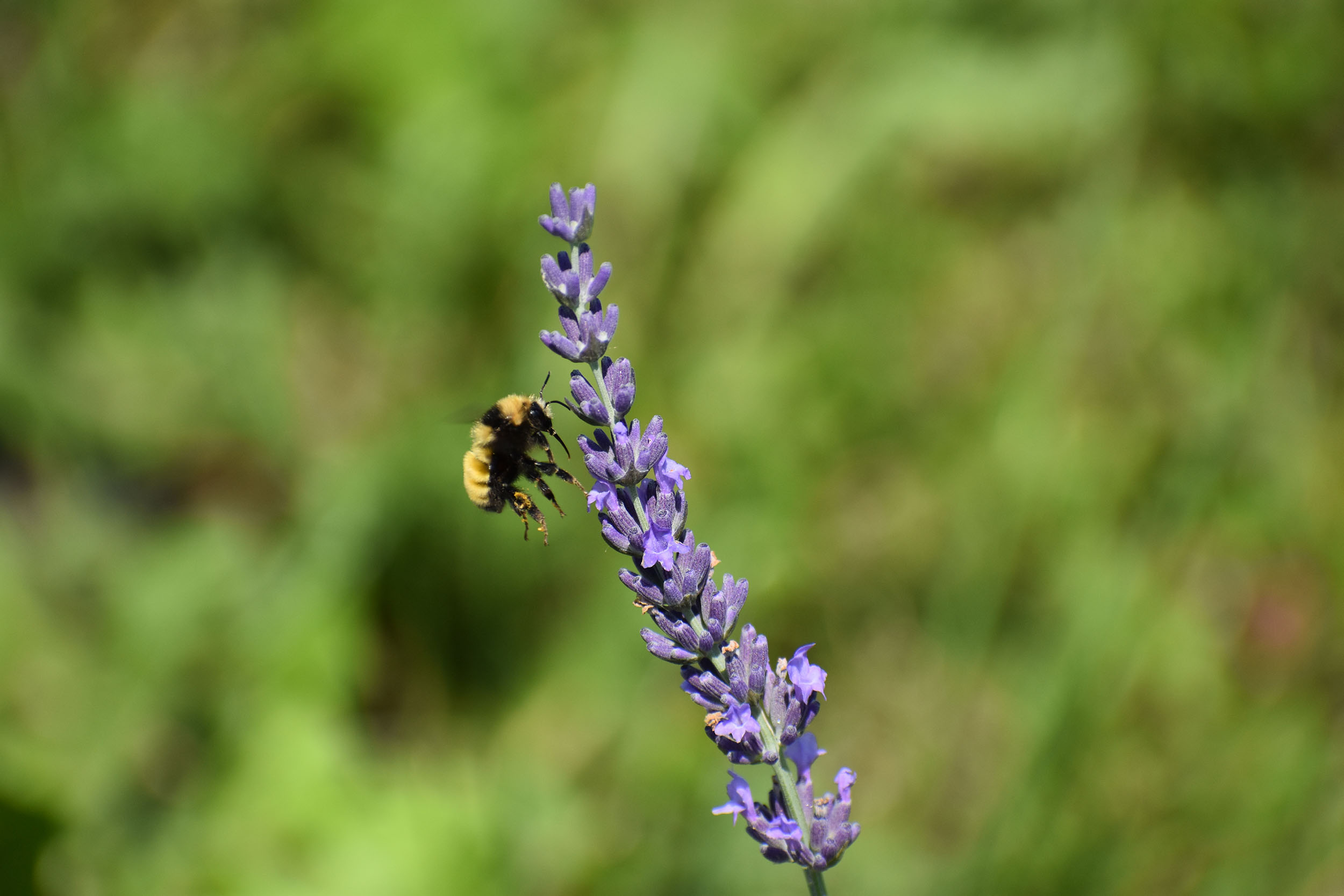
Measuring native bee diversity in bee-friendly urban gardens in Kelowna, British Columbia, and testing whether garden characteristics or surrounding urbanisation explain it.
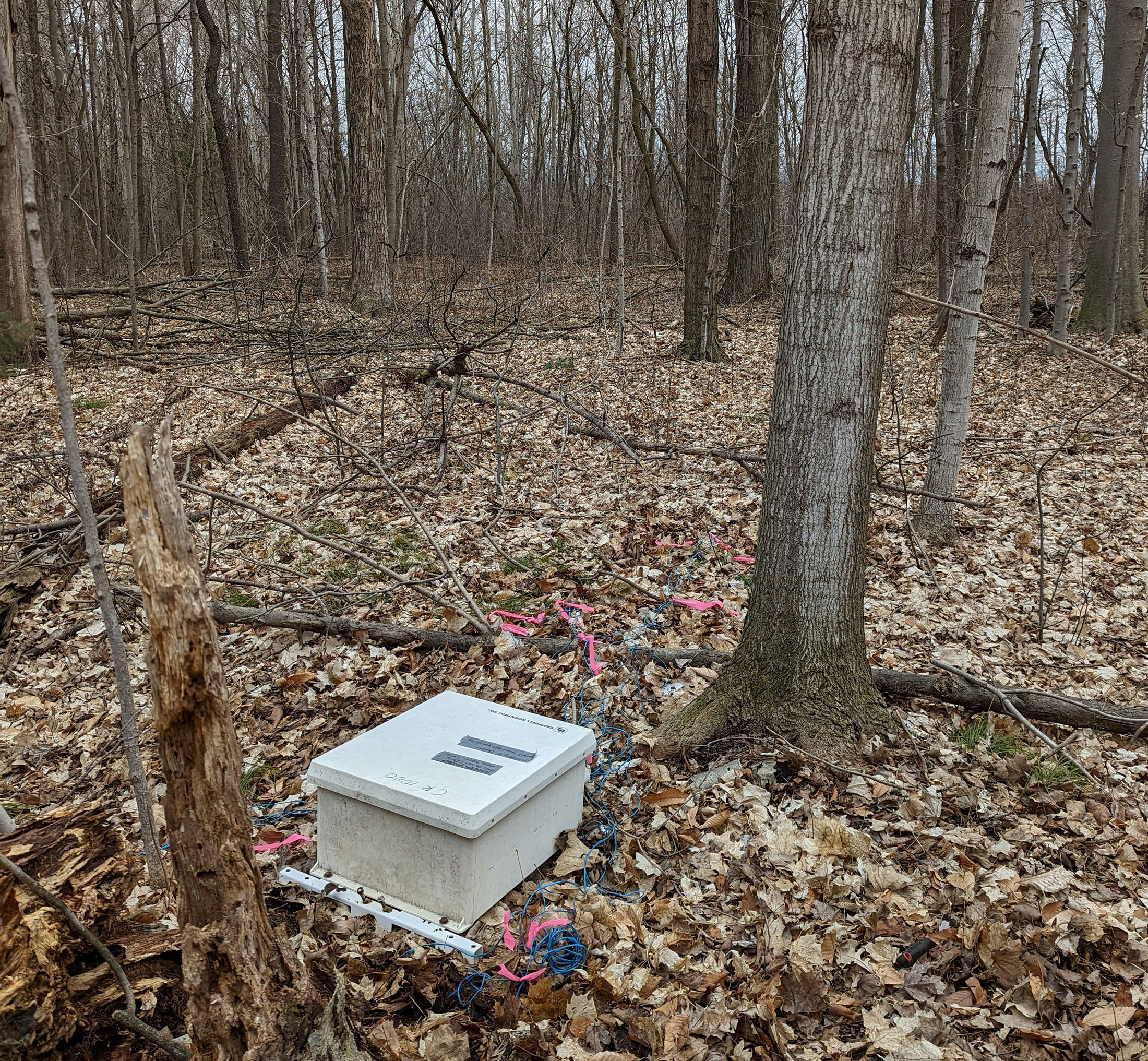
Does soil temperature predict bumble bee queen emergence in spring?
Surveying for bumble bee queens while measuring soil temperature at different depths, to test whether emergence timing tracks the soil an overwintering queen is buried in.
Landscape-scale movement and conservation planning
Turning behaviour and habitat data into maps that say where action should happen.
Pattern descriptions do not commit anyone to anything; maps do. I have identified conservation priority areas for North American bumble bee species in Canada under current and future climate, then asked which of those priority areas overlap regions where pathogen spillover from managed bees is most likely. In parallel I led a multi-institution synthesis of the advances and unresolved challenges in ecological connectivity science, which is the methodological foundation the prioritisation work depends on.
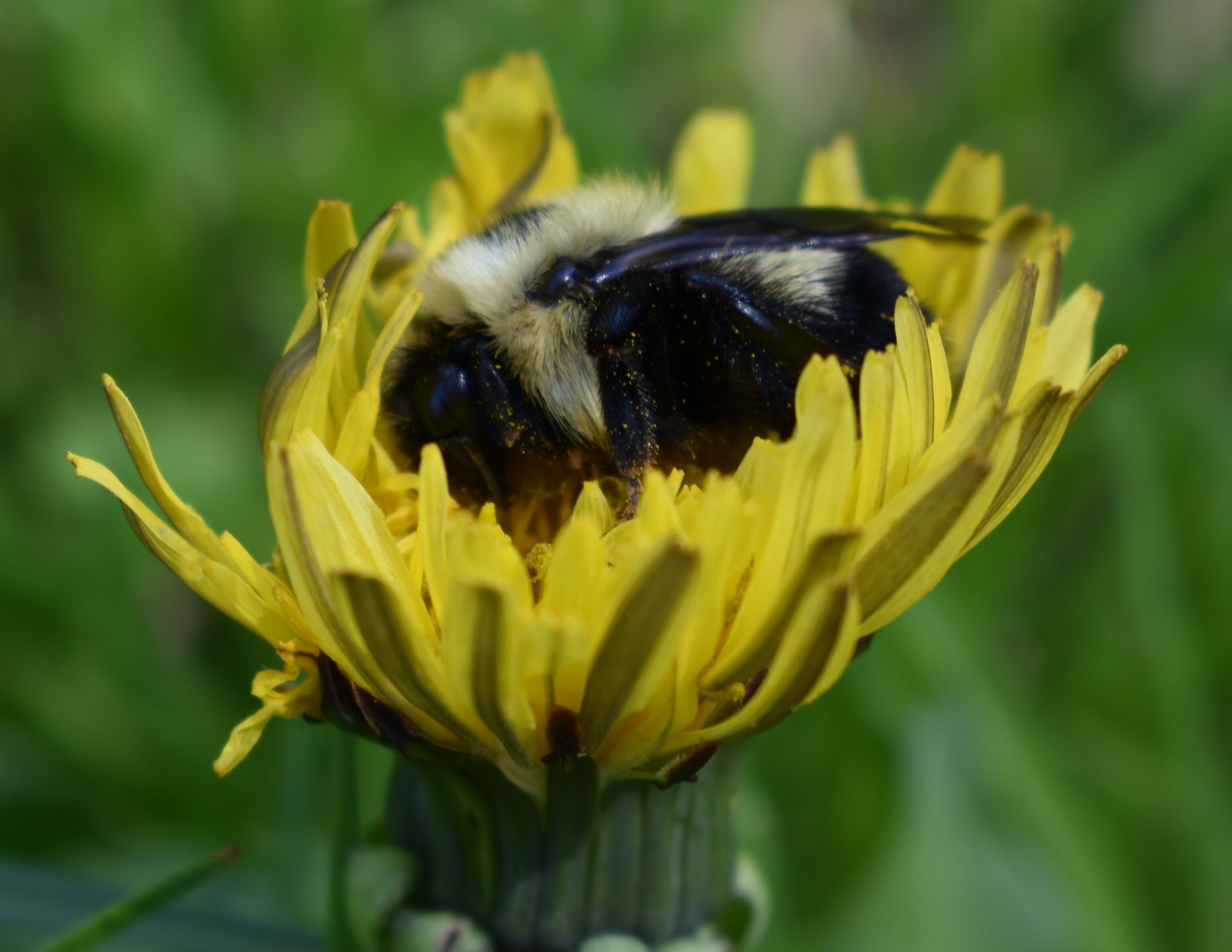
Pathogen risk to bumble bees across Canada
Identifying regions in Canada where pathogen spillover from managed bees poses the highest risk to wild bumble bees, and where that risk overlaps existing conservation priority areas.
Earlier work
Seven of my peer-reviewed papers come from earlier work on plant–plant facilitation and restoration in Californian desert and invaded arid shrubland systems, alongside alpine-tundra germination experiments and lake surveys in northern Ontario. That is where the systematic review, meta-analysis, and experimental design skills the current work depends on were built.
Research appointments
-
Postdoctoral Research Associate
May 2026 – present
Western University , Department of Biology and the Centre for Animals on the Move
Supervised by Dr. Yolanda Morbey and Dr. Alice Boyle
Identifying key migratory areas for conserving birds, using the continental Motus Wildlife Tracking System to model movement across the Great Lakes region of northeastern North America.
-
Quantitative Ecologist
Jan 2026 – May 2026
Apex RMS
Landscape connectivity assessments under environmental change, and habitat suitability modelling.
-
Research Analyst
Jul 2025 – Jan 2026
Toronto and Region Conservation Authority , Ecosystem and Climate Science
Greenspace access and the identification of high-value conservation areas.
-
Postdoctoral Research Fellow
May 2021 – Jul 2025
University of Guelph
Supervised by Dr. Nigel Raine
Impacts of environmental stressors on bumble bee movement. Supported by an NSERC Postdoctoral Fellowship. This is the work behind the radio-telemetry projects below: tracking free-flying queens with miniaturised tags and a fixed tower array to measure flight behaviour, home range, and habitat selection.
-
Postdoctoral Research Fellow
Sep 2020 – Feb 2022
University of British Columbia Okanagan , BRAES Institute
Supervised by Drs. Jason Pither, Adam Ford, Lael Parrott, Josie Hughes and Richard Pither
Connectivity conservation challenges in landscape ecology. Worked within a multi-institution group to synthesise the state of ecological connectivity science and its open problems, including how to move beyond static connectivity maps towards representations that reflect the actual movement and behaviour of organisms.
Graduate research
-
PhD, Biology
2016 – 2020
York University
Supervised by Dr. Sheila Colla
At-risk bumble bee species’ habitat, with the Native Pollinator Research Lab. Used literature reviews, local-scale surveys, landscape-scale models, and detection dogs to map bumble bee conservation priority areas across Canada.
-
MSc and BSc, Biology
2009 – 2016
York University
Supervised by Dr. Christopher Lortie
Native plant restoration and plant–plant facilitation across ecosystems: shrub facilitation and restoration in Californian deserts and invaded arid shrubland, cyanobacteria abundance in northern Ontario lakes, and seed germination with and without plant interactions in the alpine tundra of northern British Columbia. Seven peer-reviewed papers came out of this work.
Dissertation titles, awards, teaching, and service are listed on the CV and expertise page.
Research outputs
Papers, talks, and the full academic record arising from these positions.