Impacts of environmental stressors on bumble bee queen movement
- Role
- Postdoctoral research fellow
- Institution
- University of Guelph
- Collaborators
- Dr. Nigel Raine, E. Franklin, S. Rondeau
- Study system
- Bumble bee queens (Bombus spp.)
- Methods
- Radio telemetry, fixed tower arrays, home range and habitat selection analysis
- Years
- 2021–2025
- Status
- Manuscripts in preparation
Bumble bees are important pollinators for wild flowers and crops.
They pollinate flowers while collecting the flower's pollen and
nectar that they collect to feed themselves and their young. While
collecting pollen and nectar in agricultural areas, they can become
exposed to pesticides sprayed on crops to fend off crop pests.
Although the levels of these pesticides that are sprayed on crops
are not allowed to reach limits that are lethal to bumble bees,
researchers have noted there can be sublethal impacts of these
chemicals.
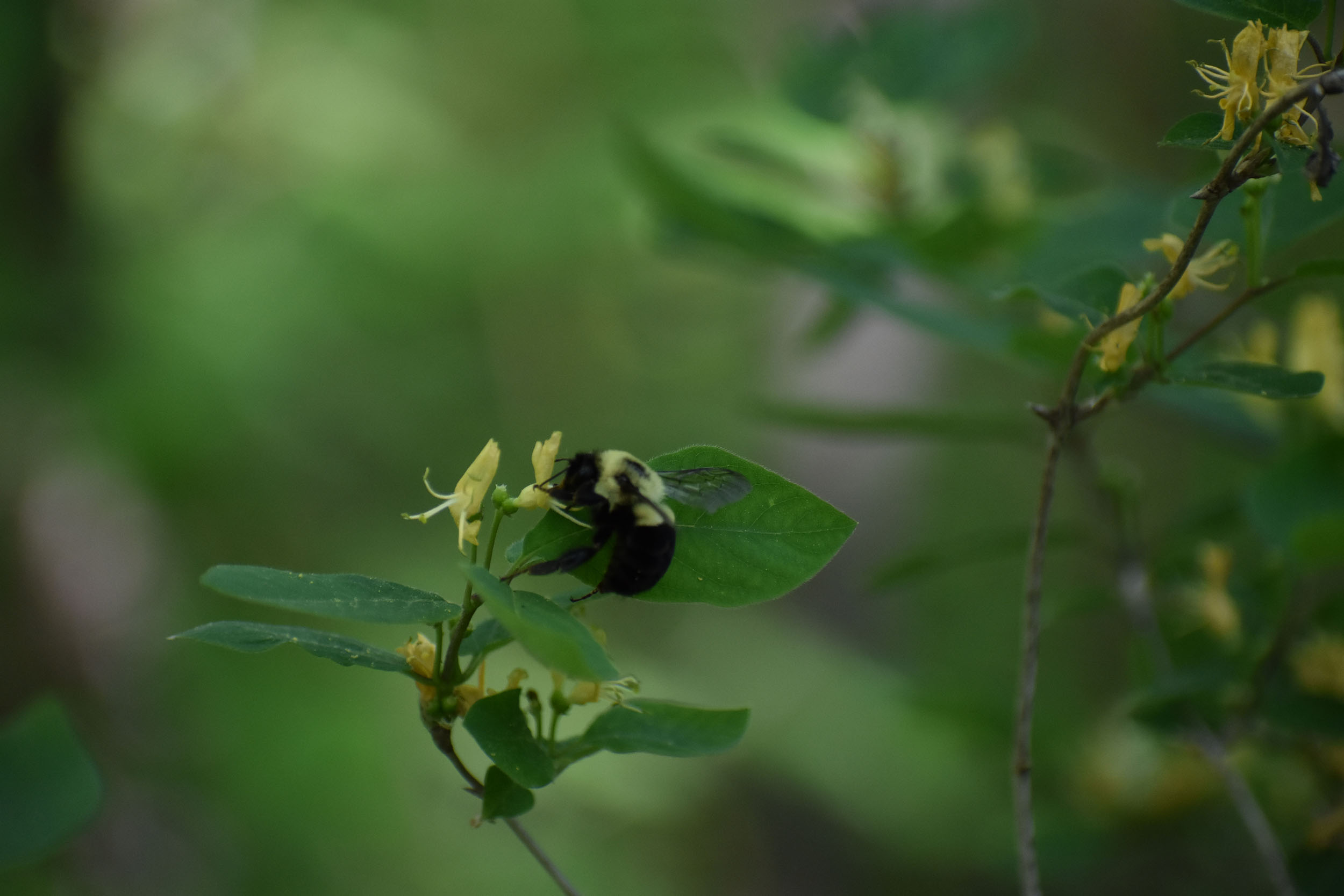
Sublethal impacts do not cause the bees to die, but can still cause
harm for example by limiting learning and memory (1, 2), limiting
foraging ability(3, 4), interrupt sleep and circadian rhythms(5, 6),
and change flight behaviour(7, 8). Although we know that sublethal
impacts do occur, pesticide regulatory agencies are not required to
test for these impacts before approving the use of pesticides.
Neonicotinoids are one class of pesticides that have become notorious for their impacts to pollinators such as bumble bees. As their negative impacts become widely known, neonicotinoids are becoming increasingly regulated and restricted. This will lead to growers looking for alternative pesticides to protect their crops from pests. Newer classes of pesticides could replace neonicotinoid use but whether these newer classes have sublethal impacts is not known.
Neonicotinoids are one class of pesticides that have become notorious for their impacts to pollinators such as bumble bees. As their negative impacts become widely known, neonicotinoids are becoming increasingly regulated and restricted. This will lead to growers looking for alternative pesticides to protect their crops from pests. Newer classes of pesticides could replace neonicotinoid use but whether these newer classes have sublethal impacts is not known.
To test for possible sublethal impacts of newer pesticide classes on
bumble bee queen movement in spring and late summer using
radiotelemetry.
We are radio tagging bumble bees to track their movement after being exposed (or not) to different pesticides and comparing their movement behaviour.
We are radio tagging bumble bees to track their movement after being exposed (or not) to different pesticides and comparing their movement behaviour.
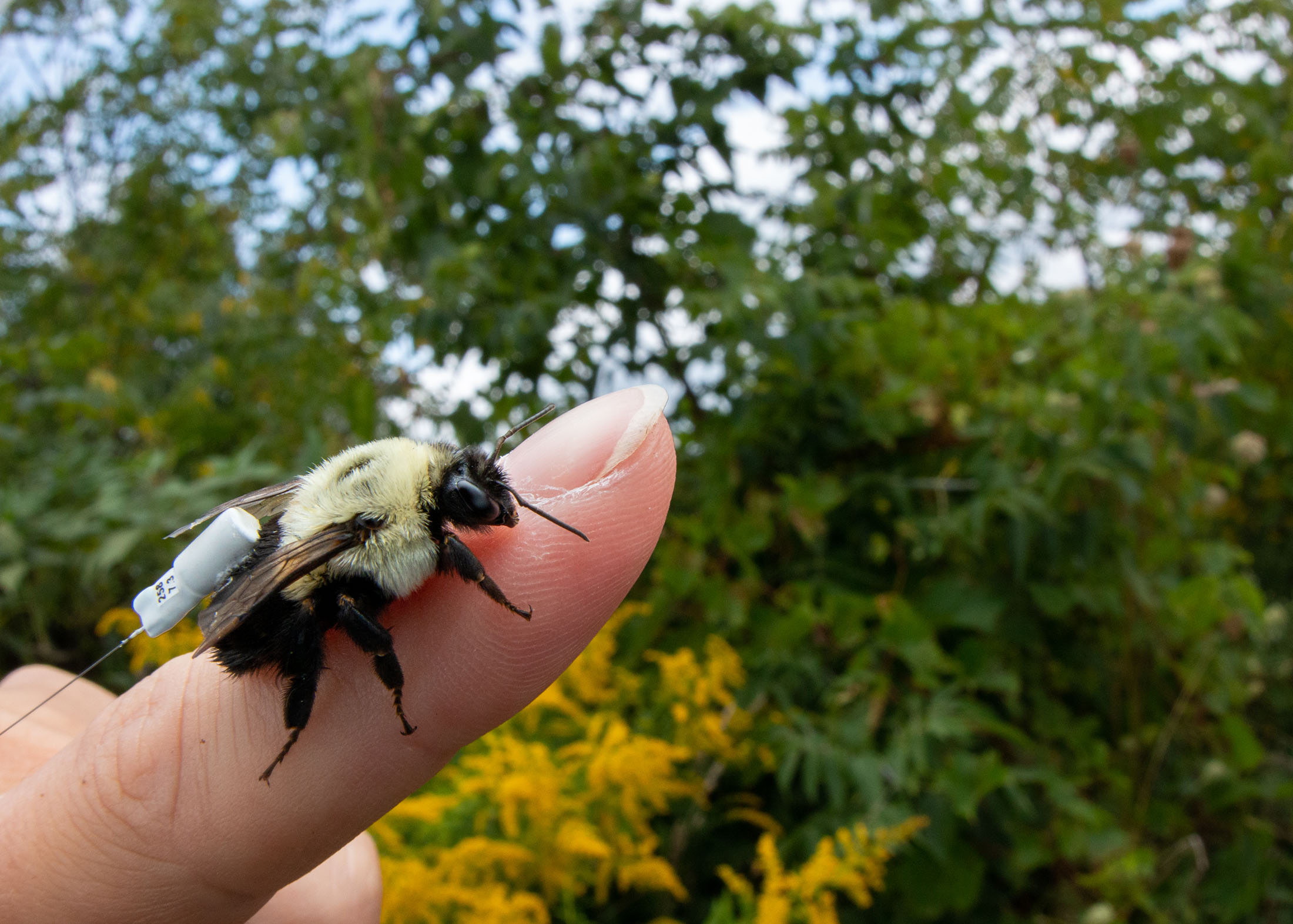
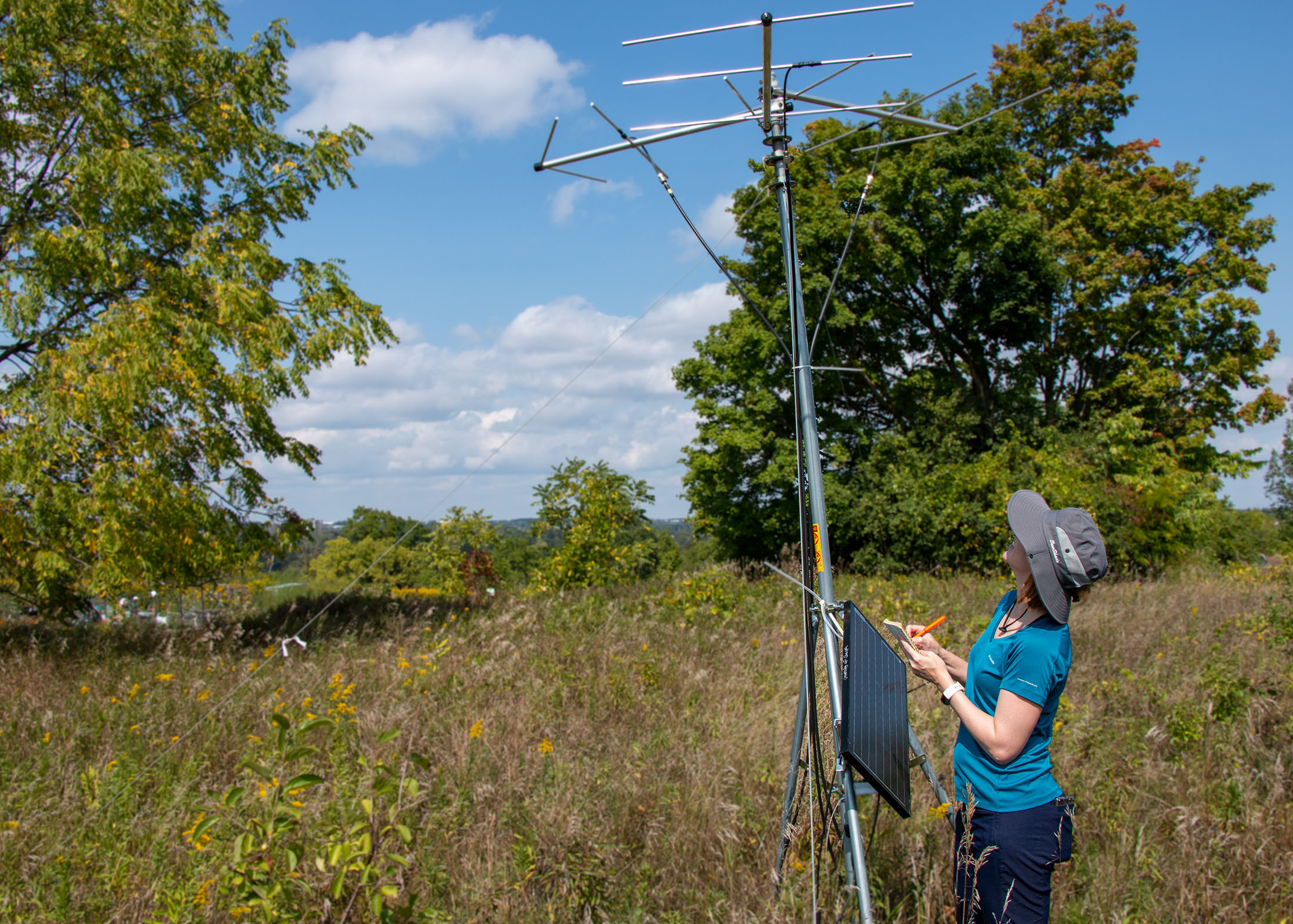
Their movements are tracked using radio towers set up at our study
sites. Using this data, we have compared the flight distance, home
range, habitat usage and selection of bumble bee queens. The results
are still preliminary, but it unfortunately looks like a newer class
of pesticide called diamides are just as harmful as neonicotinoids
when we look at their flight behaviour.
References:
- E. E. W. Samuelson, Z. P. Chen-Wishart, R. J. Gill, E. Leadbeater, Effect of acute pesticide exposure on bee spatial working memory using an analogue of the radial-arm maze. Scientific Reports. 6, 38957 (2016).
- D. A. Stanley, K. E. Smith, N. E. Raine, Bumblebee learning and memory is impaired by chronic exposure to a neonicotinoid pesticide. Scientific Reports. 5, 16508 (2015).
- D. A. Stanley, N. E. Raine, Chronic exposure to a neonicotinoid pesticide alters the interactions between bumblebees and wild plants. Functional Ecology. 30, 1132–1139 (2016).
- D. A. Stanley, A. L. Russell, S. J. Morrison, C. Rogers, N. E. Raine, Investigating the impacts of field-realistic exposure to a neonicotinoid pesticide on bumblebee foraging, homing ability and colony growth. Journal of Applied Ecology. 53, 1440–1449 (2016).
- M. C. Tackenberg, M. A. Giannoni-Guzmán, E. Sanchez-Perez, C. A. Doll, J. L. Agosto-Rivera, K. Broadie, D. Moore, D. G. McMahon, Neonicotinoids disrupt circadian rhythms and sleep in honey bees. Scientific Reports. 10, 17929 (2020).
- K. Tasman, S. A. Rands, J. J. L. Hodge, The neonicotinoid insecticide imidacloprid disrupts bumblebee foraging rhythms and sleep. iScience. 23, 101827 (2020).
- D. Kenna, H. Cooley, I. Pretelli, A. R. Rodrigues, S. D. Gill, R. J. Gill, Pesticide exposure affects flight dynamics and reduces flight endurance in bumblebees. Ecology and Evolution. 9, 5637–5650 (2019).
- S. Tosi, G. Burgio, J. C. Nieh, A common neonicotinoid pesticide, thiamethoxam, impairs honey bee flight ability. Scientific Reports. 7, 1201 (2017).
Research significance
Pesticide registration in Canada and internationally does not require sublethal behavioural endpoints, so one class can replace a restricted class without its movement effects ever being characterised. This study provides a directly comparable telemetry endpoint (flight distance, home range, and habitat selection in free-flying queens) for a newer class positioned to do exactly that. Queens are the correct unit of measurement: a single queen’s failure removes a whole prospective colony.
Outputs
- Liczner AR, Franklin E, Rondeau S, Raine N. Bumble bee queen behaviour and habitat selection changes differ after hibernating in pesticide-contaminated soil. In preparation.
- Liczner AR, Franklin E, Raine N. Impacts of a neonicotinoid insecticide on bumble bee gyne movement behaviour. In preparation.
- Liczner AR, Franklin E, Raine N. 2023. Flying in the face of danger? Flight behaviour impacts for bumble bee queens exposed to systemic insecticides. International Pollinator Conference, State College, Pennsylvania.
- Liczner AR, Franklin E, Raine N. 2022. Impacts of systemic insecticide exposure on the movement ecology of bumble bee queens. Joint CSEE and ESA conference, Montreal.