Pathogen risk to bumble bees across Canada
- Institution
- York University
- Collaborators
- Dr. Sheila Colla, Dr. Gordon Fitch
- Study system
- Wild bumble bees (Bombus spp.) and managed bees
- Methods
- Spatial risk mapping, overlay with conservation prioritisation outputs
- Extent
- Canada
- Status
- Published (2025)
Bumble bees are facing many challenges, and one growing concern is
the spread of diseases from managed bees to wild populations. While
scientists have known about this risk for years, few studies have
mapped out where the danger is highest. Our research looked at this
issue across Canada, identifying areas where conservation efforts
for bumble bees overlap with regions at risk of disease spillover
from managed bees.
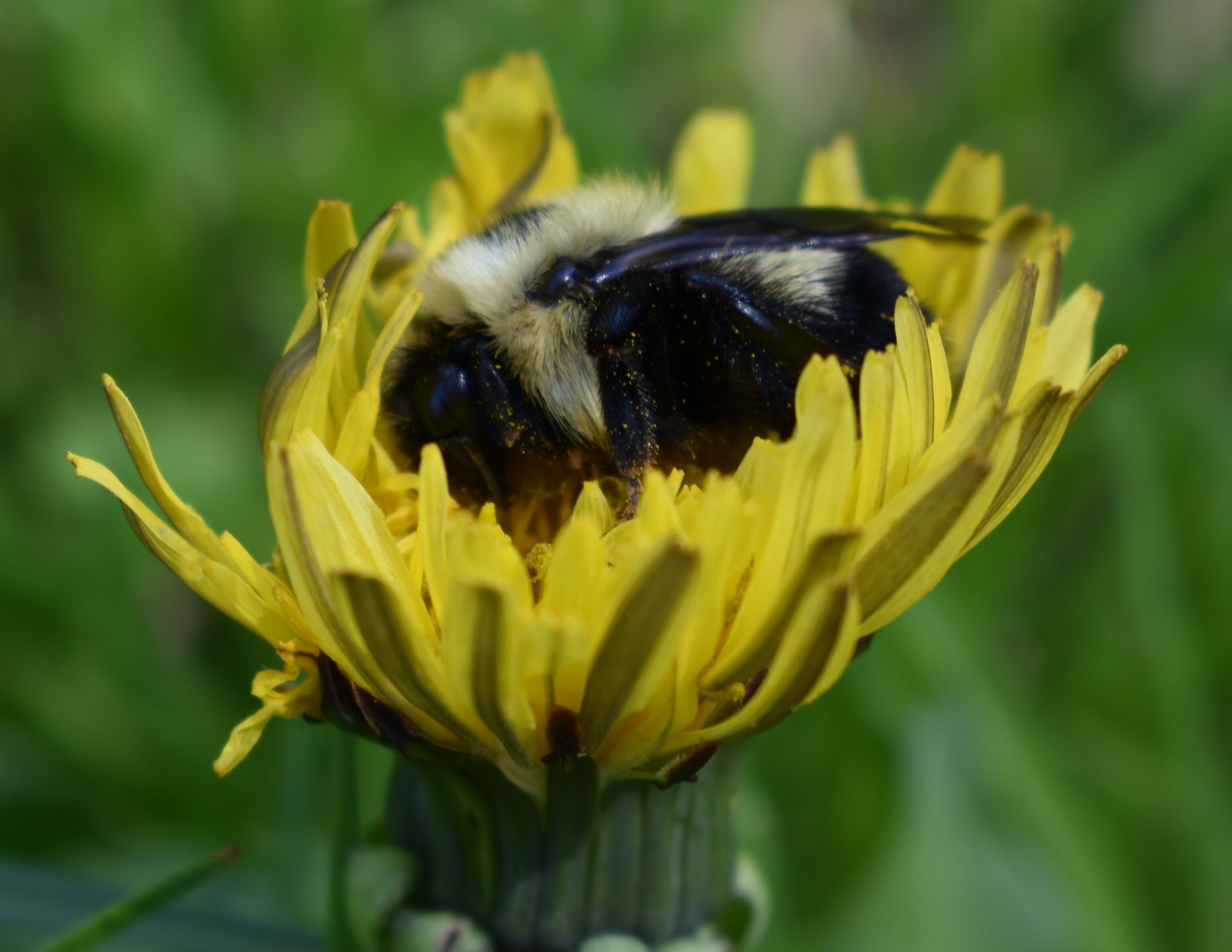
We found that more than 15% of high-priority conservation areas for
bumble bees are at risk, with hotspots in southwest Alberta,
southern British Columbia, southern Ontario, and southern
Quebec, places that also happen to be home to the richest
diversity of bumble bee species. The risk isn’t limited to
farms or cities; even natural areas could be affected.
To help protect wild bumble bees, we need to adopt better management
practices, such as screening managed bees for disease, improving
colony care, treating infections, and setting up national monitoring
and reporting programs. Our findings give conservation groups and
policymakers the tools to focus their efforts where they’re
needed most, helping to safeguard these essential pollinators and
the ecosystems they support.
Research significance
Pathogen spillover from managed to wild bees has been recognised for two decades but rarely mapped, so it has not entered spatial conservation planning. Overlaying spillover risk on bumble bee conservation priority areas identifies where the two coincide, and therefore where screening, colony-health, and monitoring requirements would have the greatest effect. The result, that risk is not confined to agricultural or urban land, argues against the assumption that protected areas are insulated.
Outputs
- Liczner AR, Fitch G, Colla SR. 2025. Assessing pathogen risk for wild bumblebees (Bombus spp. Apidae) in Canada. Conservation Science and Practice 7: e70099.